Confinement food (zuo yue zi): what's in it, what it does, and what it costs in Singapore
A guide for Singapore readers. Prices were checked 13 November 2026 and are labelled by how they were verified — read on the operator's own site that day, taken from the operator's site or a marketplace listing, or from a secondary comparison guide. Prices move, so re-check before ordering. No health score, no ranking, not medical advice.
The short version. Confinement food is the food arm of zuo yue zi (坐月子, "sitting the month"), a roughly 28–30-day Chinese postpartum recovery period (Malay pantang is 44 days, Indian custom 40 days). It is a cultural practice, not a medical requirement. A standard delivered meal is a staple plus a meat or fish dish, a vegetable dish, an herbal soup, and red-date tea. The honest split this page keeps throughout: the nutritional core is sound — protein, iron, omega-3, calcium, extra calories and fluids for breastfeeding, and rest — and HPB/HealthHub endorse it in those terms. The TCM-specific claims (expelling "wind", restoring yang and qi, specific dishes boosting milk, preventing joint pain or long-term illness, "cooling" foods harming recovery) are traditional, not clinically proven.
1. What is confinement food, and what is usually in it?
Confinement is a defined postpartum period of rest and recovery after childbirth, practised across Chinese, Malay and Indian communities in Singapore. Most commercial packages run 28 days — a package length, not the full 30-day custom. Delivery services usually offer 7, 14, 21, 28 or 40-day packages, single (lunch or dinner) or double (both).
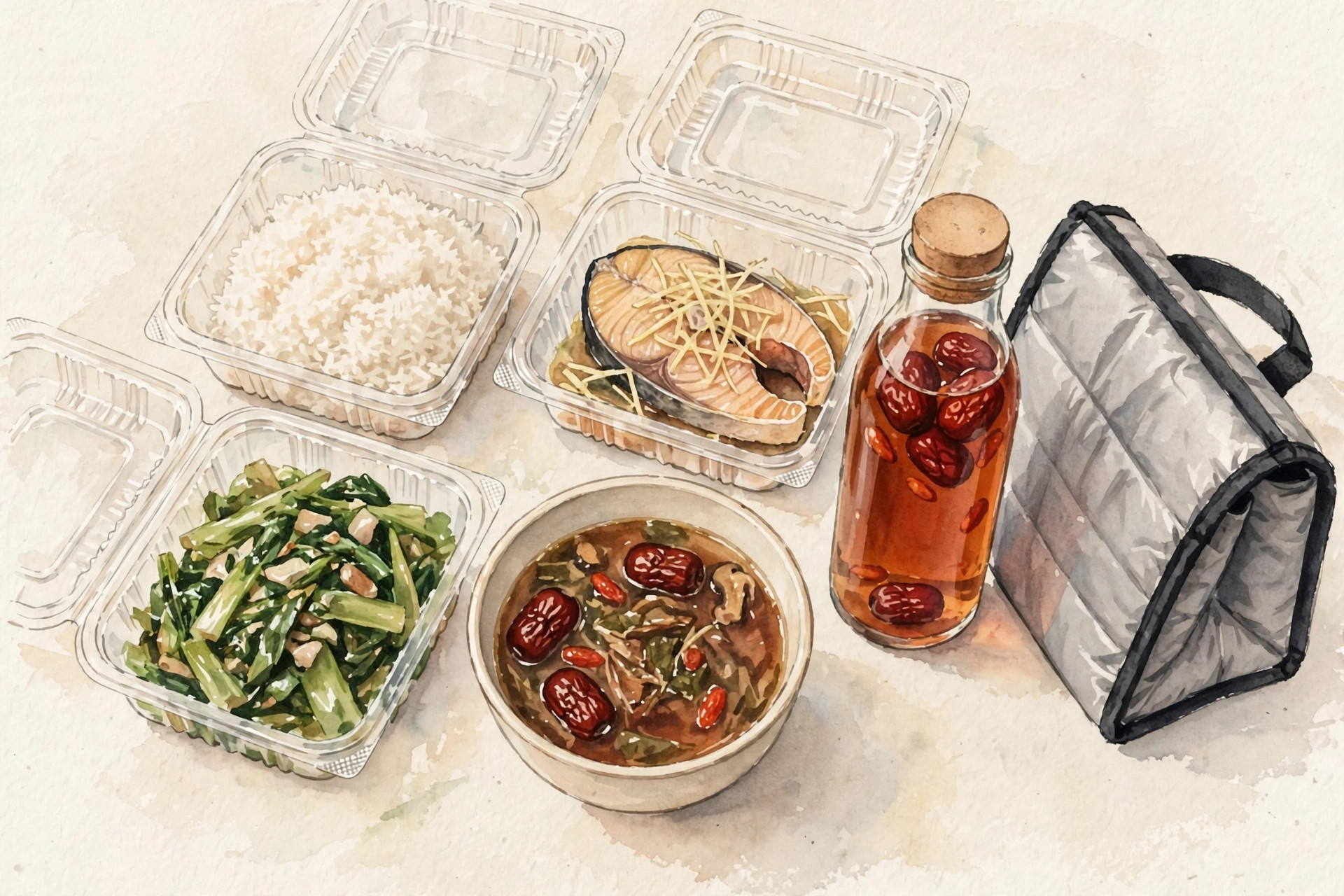
A standard delivered meal is typically one rice or carbohydrate dish, one vegetable dish, one meat or fish dish, one herbal soup, and red-date tea. Tian Wei Signature's own booking page describes each set as a one-person portion of staple (rice, noodles, vermicelli, udon or other noodles), vegetable dish, meat dish, herbal soup or warm dessert, and a cup of red-date tea. Traditional practice lists five or six meals a day including snacks and teas.
Typical dishes and ingredients
Dish / ingredient
What it is / TCM role as described by operators and guides
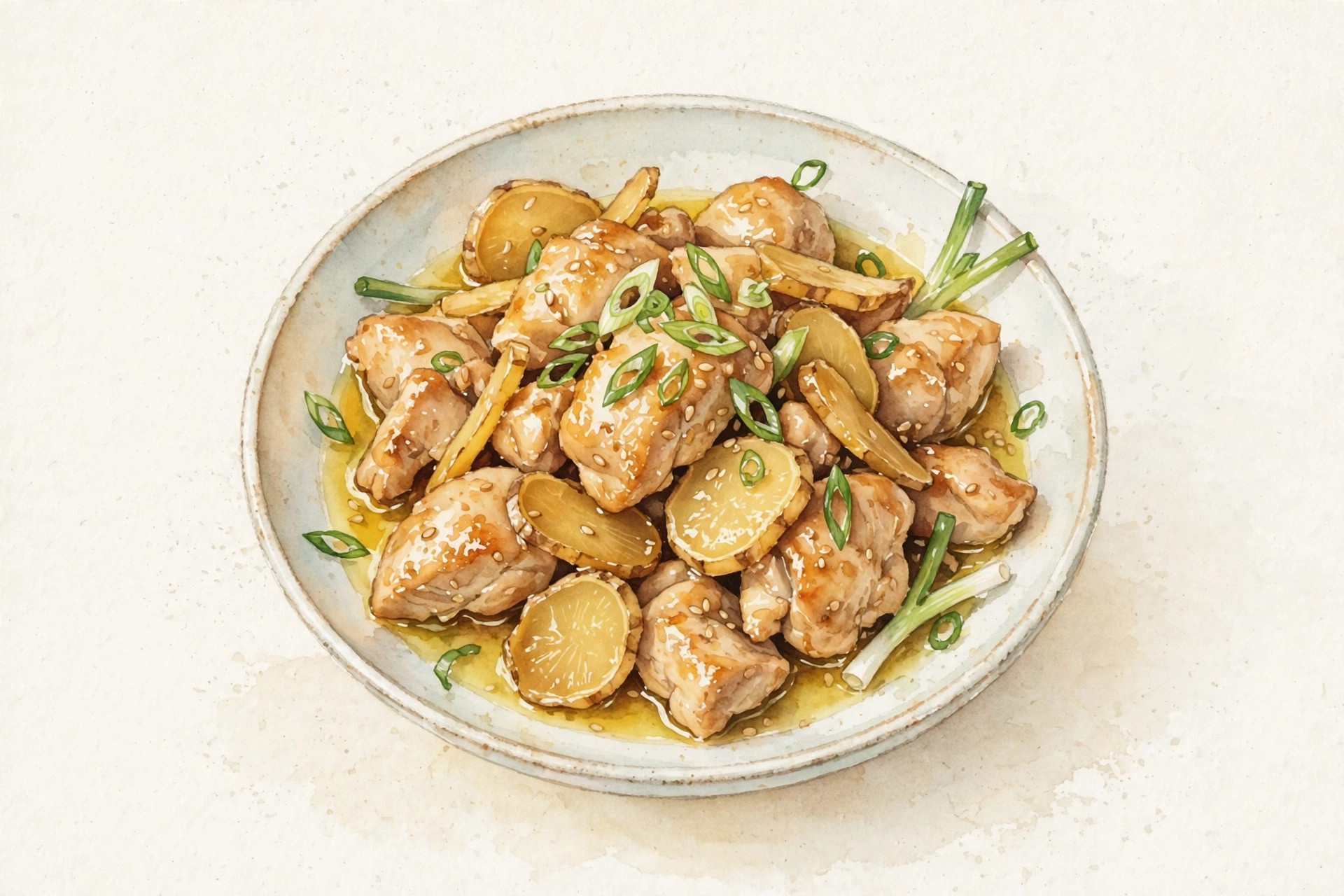
Sesame oil chicken (ma you ji)
Chicken stir-fried with old ginger in sesame oil; the warming staple, said to replenish blood and keep the body warm
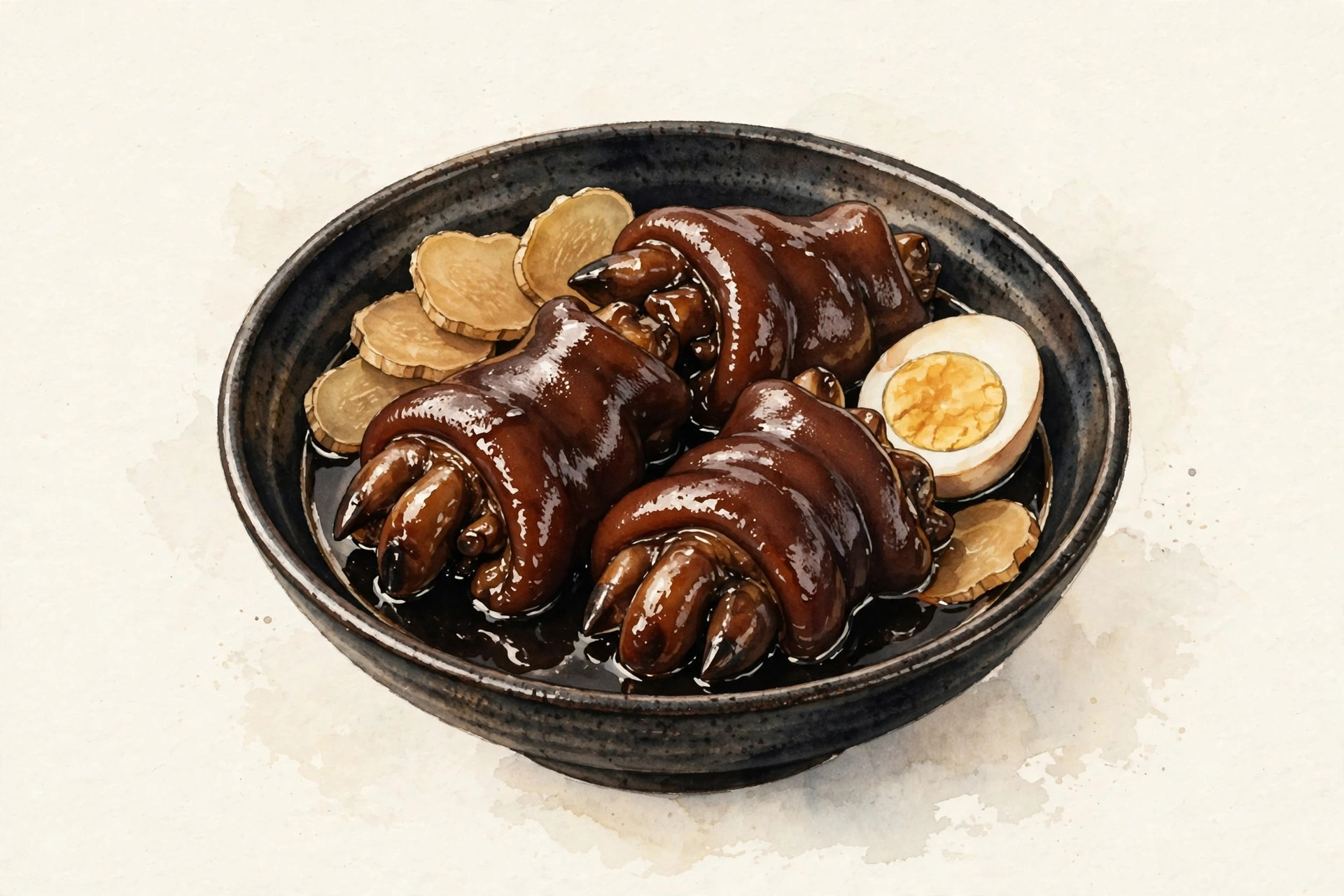
Black vinegar pig trotters (zhu jiao cu)
Pork trotters braised in black vinegar with old ginger and egg; the iconic dish, claimed for collagen and calcium, blood circulation and joint pain (operator claim — see §3)
Red fermented wine chicken (hong zao ji)
Chicken in red wine lees; warming
Black (silkie) chicken soup (wu ji tang)
Black chicken simmered with dang gui, red dates and wolfberries; blood-nourishing in TCM
Green papaya fish soup
Threadfin or snakehead (sheng yu) with unripe papaya; traditionally believed to boost milk supply
Pork liver and kidney soups
Iron and blood replenishment in TCM
Sheng Hua Tang / Sheng Hua Soup (生化湯)
The classic first-week formula (dang gui, chuan xiong, tao ren, prepared ginger, liquorice); said to expel lochia and revitalise qi and blood
Red dates (hong zao), dried longan, goji (wolfberries)
In soups and teas; TCM: replenish blood, boost energy, calm the mind and aid sleep, strengthen liver and kidney
Dang gui (当归), du zhong (eucommia bark), ba zhen (eight-treasure)
Blood tonic; lower-back and kidney strengthening; general nourishment
Fenugreek, fennel
Galactagogues (milk-boosting) in modern lactation menus
Rice wine, ginger, garlic, sesame oil
Warming, circulation, "expel wind"
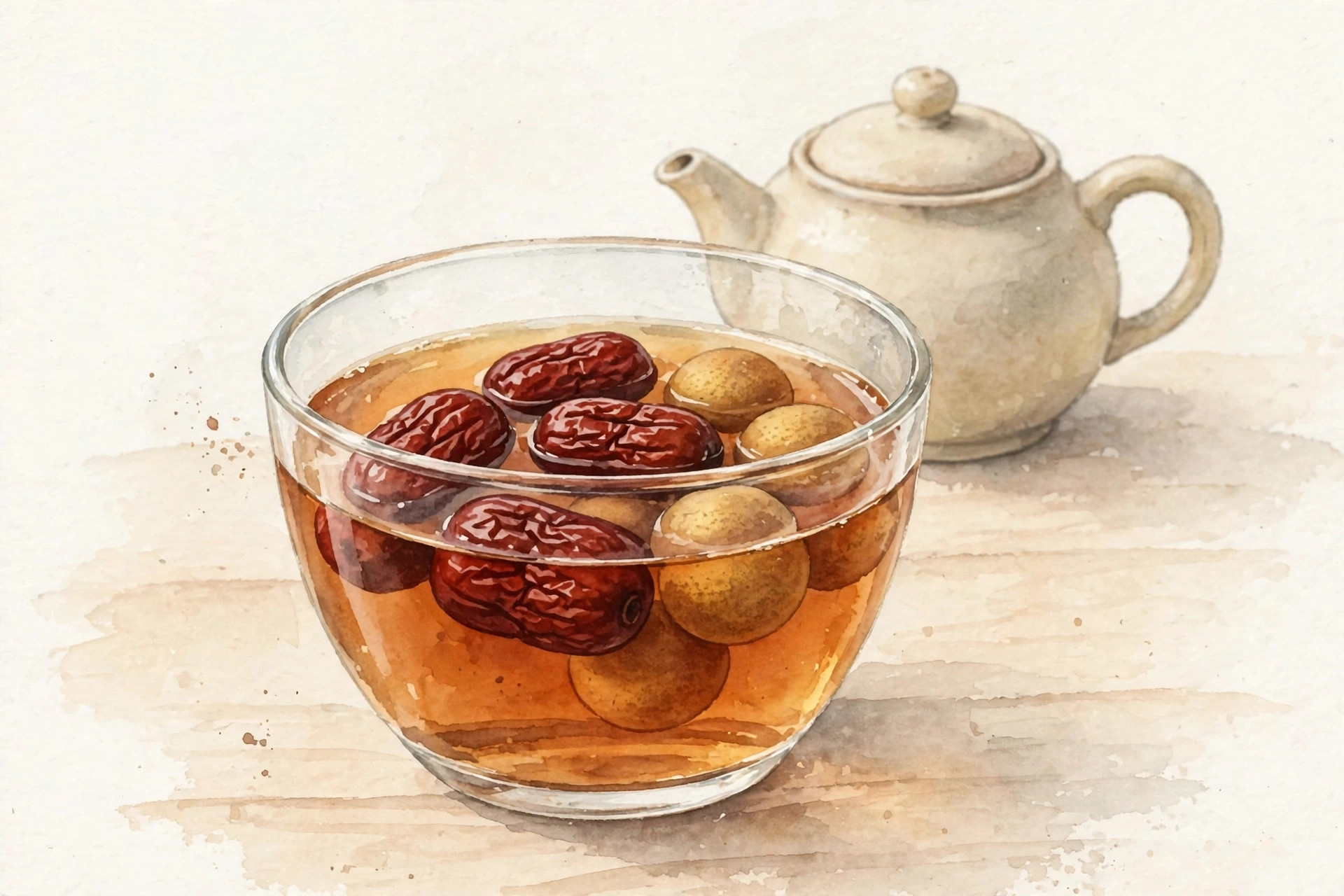
Sesame oil chicken (ma you ji) — the warming staple. Illustration.Black vinegar pig trotters (zhu jiao cu) — the iconic dish. Illustration.Red-date and longan tea — served in place of plain water. Illustration.
A typical day (illustrative, assembled from operator menus — not one operator's published day)
Lunch: mixed or brown rice; lemongrass pork-rib soup or herbal soup; ginger steamed fish fillet (sheng yu with spring onion and ginger); stir-fried greens; longan red-date tea. (Chilli Padi Day 1 lunch.)
Dinner: rice; herbal si shen chicken soup or fish-and-papaya soup; stir-fried lean meat with black fungus and dried lily; sesame-oil chicken or pig's trotter with ginger, vinegar and egg; longan red-date tea. (Chilli Padi Day 1 dinner.)
Across the day in traditional practice: red-date and longan tea in place of plain water, plus soups and warm desserts.
Phasing. Week 1 is deliberately lighter and "cleansing" — discharge lochia, revitalise blood circulation and qi, restore the uterus, expel toxins; some operators serve no chicken and eggs in Week 1. From Week 2, rotating nourishing menus. Chilli Padi frames it as Days 1–7 "Recovery" (expel wind, drive out stale blood) and Days 8–28 "Nourish" (replenish qi, boost immunity). Eu Yan Sang frames it in three steps: Clear (Days 1–7), Digest (Days 8–14), Nourish (Days 15–28).
Traditionally avoided
Cold and iced drinks and cold water; raw foods (raw vegetables and salads, sashimi); "cooling" foods in TCM terms — watermelon, cucumber, pear, and in Indian custom tomatoes, coconut milk and mutton; food cooked the day before; plain water (replaced by herb and date tea); and in some traditions chicken and eggs in the first one to two weeks, especially after a caesarean. Modern operators also advise, on food-safety (not TCM) grounds, avoiding raw and undercooked eggs, meat and seafood and high-mercury fish — see §3.
2. Why these ingredients? TCM framing vs modern nutrition
TCM framing. HealthHub (HPB) summarises it accurately and neutrally: after birth the mother is considered deficient in qi and blood, cold and "wind" have entered, and yang is depleted. She is therefore given yang or "warming" foods to restore balance and strength, compensate for blood loss, increase breast milk production, and decrease the incidence of blood clots and cold wind in the body; yin or "cooling" foods (cold, sour, bitter in nature — including many fresh fruits and vegetables) are restricted. In that framework: old ginger dispels wind and cold and aids circulation and digestion; sesame oil warms and nourishes blood; black vinegar aids circulation and clears clots; red dates and longans replenish blood and calm the mind; dang gui nourishes and invigorates blood; du zhong strengthens the lower back and kidneys; rice wine warms and promotes blood flow; Sheng Hua Tang "transforms" the old (lochia and stasis) and "generates" the new blood. This is a coherent traditional system; it is not a biochemical claim and should be presented as such.
Ingredient / group
Genuine postpartum nutritional value
Status of the TCM-specific claim
Protein- and iron-rich foods: red meat, poultry, fish, offal, liver, kidney, eggs
Protein for wound and tissue repair and milk; haem iron replaces blood loss; offal is very iron-rich but also high in cholesterol and fat
Plausible and supported in general terms. No trial shows the confinement diet as a whole heals wounds faster.
Oily fish: salmon, sardine, trout, mackerel
EPA and DHA, described as crucial to the baby's brain development and possibly helping prevent postpartum depression; at least two palm-sized servings a week
Supported as a dietary recommendation; the depression link is "may help", not proven.
Dairy, calcium, vitamin D
Bone health for mother and baby
Supported. Note many traditional menus are low in dairy — a gap a dietitian would flag.
Whole grains (brown rice, oats)
Energy, folic acid, iron, fibre; breastfeeding needs about 500 extra kcal a day on top of My Healthy Plate
Supported.
Fruit and vegetables, vitamin C
Vitamins and minerals to help heal wounds and stitches and reduce scarring; fibre for bowels and immunity; vitamin C improves plant-iron absorption; aim for 2 fruit and 2 vegetable servings a day
Supported — and this is where HealthHub explicitly parts from strict TCM: although many are classed yin or "cooling", "they should be an integral part of your postpartum diet". Neutral options for families who want to follow TCM: carrots, mushrooms, cauliflower, kailan, spinach, lotus root, long beans, snow peas, pumpkin, seaweed; grapes, apples, papaya, guava, strawberries, kiwi, peach, longan, red dates.
Ginger, garlic, turmeric, fenugreek
Ginger and garlic have anti-inflammatory properties; fenugreek, ginger and turmeric: "an increase in breastmilk production is seen… although the evidence is not well-established" (HealthHub, citing the Bumrungpert et al. 2018 trial)
Mixed / weak. See §3 on lactation. Culinary amounts are fine; concentrated supplements are a different matter.
Pig trotters, chicken feet, collagen soups
Collagen in TCM; but "high amounts of fats and cholesterol… excessive intake… may impact your risk of heart disease"; the body can synthesise collagen from high-protein foods plus zinc and vitamin C foods
Traditional claim, not evidence-based as a healing food. Eating collagen does not equal depositing collagen in a wound.
Red dates, longan, goji
Sugars and energy, some iron and vitamin C, fibre; pleasant warm drinks that encourage fluid intake
Nutritionally modest; the "blood replenishment" claim is TCM language, not a measured haematological effect.
Dang gui and other tonic herbs
Some preclinical work (for example dang gui polysaccharides and blood-cell formation, cited in secondary TCM sources)
Not established in humans postpartum; safety caveats apply — LactMed: dong quai is "best avoided during breast feeding" and may potentiate warfarin (see §3).
Rice wine / alcohol
None nutritionally; calories only
No benefit; a risk while breastfeeding (see §3). HealthHub: "new mothers should not regard alcohol as essential to recovery."
"Cooling" foods / cold drinks harming recovery
None identified
No scientific evidence. Hydration matters at any temperature; dehydration harms milk supply.
The key line: the diet works nutritionally in spite of, not because of, its TCM exclusions — the beneficial part is nutritious, warm, protein-rich food, rest and fluids, and the restrictive part (no fruit, no plain water, no cold drinks) is the part modern guidance actively corrects.
3. Claimed benefits — what is claimed, what is plausible, what is proven
Three columns throughout: traditional claim, plausible mechanism, clinical evidence.
Claimed benefit
Traditional claim
Plausible mechanism
What evidence actually supports
Wound healing (perineal / caesarean)
Blood-nourishing foods, collagen from trotters, "warmth" closes the wound
Adequate protein, vitamin C and zinc are required for collagen synthesis and tissue repair; iron corrects anaemia, which impairs healing
No trial of a confinement diet on wound healing was found. The mechanism is general nutrition, not dish-specific. HealthHub endorses protein, iron and vitamin-C foods for healing in general terms. Excess fat and cholesterol from trotters is a downside.
Energy / "restoring strength"
Replenishing qi and blood; red dates, tonics
Extra calories (about 400–500 kcal a day while breastfeeding), iron repletion, fluids, rest, sleep
Plausible, indirect. Anaemia and sleep deprivation are real causes of postpartum fatigue; correcting them helps. No evidence a specific tonic restores energy beyond that.
Lactation / milk supply
Green papaya fish soup, fenugreek, fennel, sesame oil chicken, "milk-boosting" soups
Frequent feeding and hydration are the main drivers of supply; some herbs may affect prolactin and oxytocin; soups and fluids support hydration
Weak-to-moderate, herb-specific, not dish-specific. Bumrungpert et al. 2018, randomised double-blind trial, n=50, Thailand: fenugreek 200 mg + ginger 120 mg + turmeric 100 mg, 3 times a day for 4 weeks — milk volume +49% at week 2 and +103% at week 4, vs placebo +11% and +24%. But HealthHub itself says the evidence is "not well-established", and LactMed describes it as conflicting — one meta-analysis found a mild galactagogue effect, another "found no good evidence that it is a galactagogue". No trial was found for green papaya fish soup itself. Present "milk-boosting" menu labels as marketing or traditional, not proven.
Hair loss
Black sesame "nourishes kidneys and liver, supports hair health"; blood tonics prevent shedding
Iron deficiency can worsen shedding; protein is needed for hair
No food prevents postpartum shedding. It is telogen effluvium: oestrogen falls after birth, retained hairs shed 2–5 months postpartum, fullness usually returns by about 12 months. Check ferritin and thyroid if shedding is heavy or persists past a year. Iron helps only if deficient.
Joint / back pain, "wind" in joints
Pig trotter collagen, du zhong, ginger expelling wind; warmth prevents later rheumatism
Warmth, rest, and avoiding heavy lifting help acute pain; collagen is digested, not deposited in joints
No clinical evidence found that confinement foods prevent or treat joint pain or confer long-term musculoskeletal protection. Chilli Padi's own site claims pig's trotter "can help… alleviate joint pain" — treat as an operator and traditional claim, not evidence.
Long-term health ("if you don't do confinement properly you'll suffer later")
Restoring balance now prevents chronic illness, "wind" diseases, poor health in old age
Rest, nutrition and support in the first month plausibly support recovery and mood
No long-term outcome trials of confinement diets were found. The only Singapore outcome study located is GUSTO (below), which measured symptoms at 3 months, not long-term disease. Present the long-term claim as a cultural belief.
Mood / postpartum depression
Herbs and nourishment protect mood
Oily fish (EPA/DHA), adequate nutrition, rest, and social support are all plausibly protective
Observational, Singapore, and nuanced. Teo et al. 2018, Nutrients 10(3):299, GUSTO cohort, n=490 with 3-day food diaries in the first month and EPDS/STAI at 3 months: a Traditional-Indian-Confinement diet (herbs, legumes) was associated with fewer postpartum-depression symptoms (β −0.62, 95% CI −1.16 to −0.09, per standard deviation) and a non-significant trend to less probable postpartum depression (OR 0.56, 0.31–1.01); a Soup-Vegetables-Fruits diet was associated with less anxiety (β −1.49, −2.56 to −0.42). The Traditional-Chinese-Confinement pattern was not significantly associated with less postpartum depression or anxiety. Association, not causation.
Uterine recovery / lochia
Sheng Hua Tang expels lochia and stasis
Uterine involution is driven by oxytocin (including from breastfeeding)
No trial evidence located that Sheng Hua Tang accelerates involution in humans. Use only under TCM supervision.
Safety cautions
Alcohol in cooking and tonic wine. Although there is an assumption that all alcohol evaporates, some alcohol may still be left behind depending on the cooking method and time, and alcohol levels remained high in breastmilk for a few hours (HealthHub). Advice: breastfeed or pump and store milk at least 3 hours after eating wine-cooked food; nursing mothers should avoid alcohol altogether; tonic wine is not essential to recovery. Many operators offer a "No Alcohol" option (Tian Wei's booking form does) — ask for it.
Herbal interactions and breastfeeding. HealthHub: spices and herbs should be taken in moderation, and always seek advice from a healthcare professional before consuming herbal products or supplements, as they may not always be safe or effective; if keen to take traditional herbal preparations, consult a registered TCM physician first to ensure they are safe during breastfeeding. Specific: dang gui (dong quai) — LactMed (NCBI, revised 15 June 2026): "Dong quai is best avoided during breast feeding" (no data on excretion into milk or infant safety); it "may increase the risk of bleeding in patients taking warfarin and antiplatelet drugs" — a 1999 case report of a more than two-fold INR rise on warfarin that resolved on stopping. This matters postpartum because some mothers are on anticoagulants, and because dang gui is in many confinement soups (including Sheng Hua Tang and black-chicken soup). Fenugreek can lower blood glucose, cause gut upset and allergy, worsen asthma, and interact with warfarin. Eu Yan Sang's own 2026 article carries the same caution: speak to a doctor or registered TCM practitioner before herbal products after birth, especially after a caesarean, while breastfeeding, or when taking other medicines.
Food safety for breastfeeding mothers. Avoid raw and undercooked foods (sashimi, runny eggs, rare meat, raw shellfish) — the risk is food poisoning in the mother, which impairs her ability to care for the baby, even though bacteria do not pass into milk. Mercury: SFA advises limiting predatory fish — swordfish, shark, king mackerel (batang), tilefish, bigeye tuna — because mercury is toxic, particularly to infants, and cooking does not reduce it; keep eating other (low-mercury) fish. Note: cod and Chilean seabass are often recommended in confinement but are moderate-mercury. Caffeine: appears rapidly in breastmilk; keep it to about two cups of coffee a day or less (under 200 mg a day).
Do not drop plain water or fruit. About 12 glasses of fluid a day, plain water best; red-date tea is sugary — limit to about one glass a day. No evidence that cold drinks, fruit, ginger or sesame oil cause jaundice in the baby or harm milk.
Caesarean nuance. Traditional advice to avoid chicken and eggs for one to two weeks after a caesarean has no modern basis cited; hospitals encourage early fluids, soft food, a normal diet and early mobilisation. Operators (Tian Wei, NouRiche) offer a "No Egg & Chicken for first two weeks" option — present it as a traditional preference, not a medical rule, and follow the obstetrician.
4. The operators: what they offer, what they charge, and whether you can try first
Prices below are for 28 days of double meals (lunch and dinner) unless stated, and were checked 13 November 2026. "Verified live" means read on the operator's own website that day; "operator site / listing" means read from the operator's site or a marketplace listing (FoodLine, Shopee, Mummys Market) without a live checkout; "secondary" means from a comparison guide or listicle. Prices move — Tian Wei's own price has moved from $1,710 (September 2026 contract) to $1,818 (February 2026 guide) to $1,868 today — so re-check before ordering.
Vegetarian and premium menus run higher; single-meal (lunch or dinner) roughly half
Meal delivery — soup / tea bundles only
about $328–$718
Madam Partum soup-only 28 days $328 (own site); bundles with Eu Yan Sang sets $588–$718; Eu Yan Sang 28-day soup pack $338 (own site)
Live-in confinement nanny
about $2,800–$5,500
PEM from $3,880; plus MOM foreign-worker levy $60/month (with a Singapore-citizen child) or $300/month (non-citizen child); permit max 16 weeks; 24/7, often 28-day contract with limited off-days
Confinement centre (stay-in)
about $16,888–$29,000, luxury to $42,000
Indicative only — many centres publish no price and prices conflict across guides; KAI Premium $42,000 (listing); most centres quote on request
Operators compared
Filter by halal status. Halal status is as the operators present it; the three halal operators below are from secondary sources (February 2026) and were not verified live.
Trial: Normal $35 / Signature $45 (operator site; FoodLine lists $38/$45 — prices differ by channel)
Dietitian-planned menus (dietitian Hui Min), Ma Kuang TCM reviews the soups, 100+ dishes, traditional + fusion, SFA Licence NW17128J000; no-alcohol and no-egg/chicken (Week 1–2) options on the booking form; freebies worth up to $1,887 at baby fairs; not halal, no vegetarian menu
Verified live on own site, 13 Nov 2026
Chilli Padi Confinement
$1,828 28 days double · $32.64/meal · 14 days $988 · 7 days $528
Trial: $38 (shop listing; $35 in a February 2026 guide — older figure)
Sister company of Tian Wei. Lactation-focused for the second month onwards (not a first-month confinement service); in-house dietitian Eunice Tan; freebies worth over $950; SFA Licence NW17128J000; CBD delivery +$4/trip; $100 off 28-day double for PEM nanny customers
Operator site / FoodLine listing
NouRiche
$1,788 regular / $2,258 vegetarian 28 days double
Trial: From $36, Saturdays only
The only full vegetarian menu in this list; Week 1 Sheng Hua Soup, no chicken/eggs in Week 1; delivery 10am–1pm / 4–7pm on the operator site (FoodLine lists 11am–1pm / 5–7pm — sources differ); early-bird discount for booking 30+ days ahead; 15% deposit
Operator site / FoodLine listing
Thomson Nutri
$1,962–$2,028 28 days double (range across sources)
Trial: $45; free with a 28- or 35-day package
Thomson Medical. Hospital-backed; TCM physicians, dietitians and lactation consultants; the strongest clinical framing of any operator; delivery 10am–1pm / 4–7pm
Operator site / listing (price range, not verified live)
Yue Zi Le
$1,999 28 days double
Trial: $45, Wednesdays and Fridays only
Jaundice-friendly menu; no egg/chicken in Week 1; "low-salt, low-oil, no MSG"; delivery times not stated on the operator site
Secondary only
Mama J's
$1,988 28 days double (after an August 2026 price cut from $2,288)
Trial: $42 (August 2026; $45 in a February 2026 guide — older figure)
Soup-only 28 days $328 bundle $588 (Feb guide) vs $643.90 (Shopee) / $718 (with Eu Yan Sang set)
Trial: None — soup packs, not meals
Soup and tea bundles only; no full meals
Operator site / listing
Eu Yan Sang
28-day soup pack $338
Trial: None — retail soup packs
TCM-branded soup packs; available in-store and online
Operator site
Ummu FazwillHalal
$1,550 30 days
Trial: None listed
Halal menu; includes a herbal bath set
Secondary only (February 2026), not verified live
Ukashah'sHalal
$1,500 30 days
Trial: None listed
Halal menu; 30-day packages
Secondary only (February 2026), not verified live
Sizzling DyyanaHalal
from $590 10 days
Trial: None listed
Halal menu; 10-day packages
Secondary only (February 2026), not verified live
Do not list as current: Natal Essentials. Several 2026 listicles still quote it, but no current site or 2026 price could be found and its ACRA record shows "Struck Off" (UEN 201218948H). Treat any guide that still lists it as stale.
Where operators disagree — and what that tells you
Chicken and eggs in Week 1: some operators withhold them, some serve them from Day 1. This is a traditional preference, not a medical rule — hospitals encourage a normal diet after birth.
Alcohol: most include rice wine in cooking; most also offer a no-alcohol option if asked. See the safety section above before choosing.
Delivery windows: most quote 10am–1pm / 4–7pm, but NouRiche's own site and its FoodLine listing give different times, and Yue Zi Le publishes none.
Prices: the same operator's price differs by channel (Tian Wei's trial is $35 on its own site, $38 on FoodLine) and moves over time. Always confirm the price on the channel you are actually ordering from.
Card discounts and other ways to pay less
Checked 13 November 2026. There is no operator-level credit-card discount found for Tian Wei Signature, Chilli Padi, Thomson Nutri, ReLacto, Mama J's, Yue Zi Le, KAI or the halal operators. What does exist:
NouRiche — OCBC, 5% off. Code OCBCBABY on nouriche.sg gives an extra 5% off the Regular and Vegetarian Twin Meal 28-day packages, on top of the early-bird discount. Payment must be made with an OCBC Debit or Credit Card, and the OCBC Baby Bonus ATM Card must be presented within the first 14 days of delivery. A 15% deposit is required. Not valid for add-on or trial meals. (Operator's own promotions page.)
FoodLine — DBS/POSB, 10% off (capped at $30). The FoodLine x DBS Xmas Promo 2026 gives 10% off any FoodLine order with a minimum spend of $300, capped at $30, valid 1 November–31 December 2026, one use per customer, online payment with a DBS/POSB card only (no PayNow/PayLah). It applies to "any of the caterers on FoodLine", which includes the confinement caterers listed there (ReLacto, NouRiche, Mama J's and others). The coupon code is distributed via FoodLine's promo page and mailing list — check foodline.sg for the current code. It cannot be stacked with other promotions, and it replaces (rather than adds to) the usual $3 review cash reward. FoodLine also lists an OCBC Xmas Promo 2026 — check its promo page for the current terms.
Expired — do not use: the earlier FoodLine x DBS/POSB offer of $20 off tingkat and confinement orders (code DBST20 + first 6 digits of the card) ended 31 May 2026. Old listicles still quote it.
Early-bird and fair deals (not card-linked): Tian Wei offers up to $188 off when booked at least one month before the due date, plus freebies worth up to $1,887 at baby fairs (Mummys Market, October 2026); Chilli Padi lists a 5% early-bird code EB5OFF (September 2026 — verify it is still live); NouRiche gives an early-bird discount for bookings 30+ days ahead; ReLacto gives $100 off its 28-day double to PEM nanny customers.
Paying by card at all: most operators accept credit cards online (NouRiche's FoodLine listing lists "Online Payment, Bank Transfer, Credit Cards, PayNow"). Tian Wei Signature is classified by DBS as a caterer (MCC 5811) and has appeared as an example merchant in past DBS dining promotions, so a dining-category card may earn dining rates on it — that is card-dependent, not a discount, and the past promos themselves have expired. Check your own card's terms at checkout.
5. Practical guidance
When to book. Meal delivery: the operational lead time is short (1–2 working days), but book in the third trimester — popular operators fill up, and early-bird discounts (up to $188 at Tian Wei) require booking at least a month ahead. Nannies: 3–6 months ahead. Centres: as early as possible; many require a deposit months in advance.
Try before you commit. Trial meals run $35–$45 for one lunch or dinner. Try 2–3 providers — taste, portion size and delivery punctuality differ more than the menus suggest. Note the restrictions: NouRiche trials are Saturdays only; Yue Zi Le Wednesdays and Fridays only; Thomson Nutri's trial is free if you then take a 28- or 35-day package.
Check the licences. Meal delivery: look for an SFA food-shop licence (Tian Wei and ReLacto publish NW17128J000). Nannies: the agency must hold a MOM employment-agency licence. Confinement centres: there is no specific licence category for them — check the operator's own credentials and reviews instead.
Read the fine print. Cancellation and refund terms, Chinese New Year surcharges and blackout dates (most operators charge extra or do not deliver over CNY), delivery surcharges (Sentosa +$20/trip at Chilli Padi; CBD +$4/trip at ReLacto), and whether the quoted price includes GST.
Questions to ask before booking: Is there a no-alcohol option, and is it the same price? Which herbs are in the soups — in particular, is dang gui used, and can it be left out while breastfeeding? How are allergies and dietary exclusions handled? How much does the menu repeat over 28 days? Is there lactation support (dietitian or consultant) included? What are the deposit, cancellation and postponement terms (for example if the birth is early or late)? What happens over Chinese New Year? Is delivery included for your area, or is there a surcharge?
Sources and how this page was checked
Prices and operator details were checked 13 November 2026. "Verified live" means read on the operator's own website that day; other figures are labelled by source. Re-check before ordering — prices move.
HealthHub (HPB), "Postpartum Nutrition: Your Road to Recovery" — healthhub.sg/live-healthy/postpartum-nutrition-your-road-to-recovery
Teo et al. 2018, "Traditional and Modern Dietary Patterns in the First Month Postpartum and Their Associations with Postpartum Depression and Anxiety in Singapore", Nutrients 10(3):299 (GUSTO cohort, n=490) — mdpi.com/2072-6643/10/3/299
Bumrungpert et al. 2018, randomised double-blind trial of fenugreek, ginger and turmeric on breast-milk volume (n=50) — as cited by HealthHub; LactMed, "Fenugreek" — conflicting evidence summary
LactMed (NCBI), "Dong Quai" (NBK501836, revised 15 June 2026) — "best avoided during breast feeding"; warfarin interaction
Tian Wei Signature booking page — tianweisignature.com/booking-v2 (verified live 13 Nov 2026); Chilli Padi Confinement — chillipadiconfinement.com (verified live 13 Nov 2026)
FoodLine — foodline.sg (ReLacto, NouRiche, Mama J's listings; FoodLine x DBS Xmas Promo 2026 T&Cs, 1 Nov–31 Dec 2026, 10% off min $300 capped at $30)
Half Half Parenting, "Confinement Food Delivery in Singapore" (February 2026 guide — secondary); Mother & Baby Singapore; MissLobang; Lendela; FussyMama; HeyBaby; CNA — secondary sources for operator prices and customs
Eu Yan Sang, "Confinement Food: A Guide to Postpartum Recovery" (2026) — TCM framing and herbal cautions; KKH via Mother & Baby — confinement customs and durations (Malay 44 days, Indian 40 days)
Note: some figures in secondary guides conflict with operator sites (trial prices, delivery windows, Thomson Nutri's price). Where they conflict, this page gives the operator-site figure and flags the difference.